Abstract
A new foam application technique for bleaching woven fabrics reduces water and energy consumption while maintaining effective whitening.
Researchers combined the foam application technique with bleaching and ozonation methods to reduce environmental impact. They developed a suitable foam formulation and applied an ozone post-treatment to fabrics. The results showed that the foam application technique achieved sufficient whitening and is a promising sustainable alternative for textile production.
Full TextOpen Access
The textile industry is one of the most water-intensive industrial sectors, with pre-treatment and bleaching processes accounting for a large portion of this consumption (Pektaş, K., & Balcı, O.,2025), (Catarino, M. L., Sampaio, F., & Gonçalves, A. L., 2025) [1,2]. The high consumption of water, energy, and chemicals in conventional bleaching processes negatively impacts sustainability from both economic and environmental perspectives (Kassie, BB., Fentahun, H., & Daget, TM, 2024) [2]. This situation has necessitated the development of alternative applications that reduce water and energy consumption in the textile sector while maintaining process efficiency. Conventional hydrogen peroxide bleaching is the most widely used method for whitening cotton fabrics, and the process is carried out at approximately 98 °C in an alkaline condititons. During the process, auxiliary chemicals such as wetting agents, ion exchangers, stabilizers, and sodium hydroxide are used; at the end of the process, the fabrics undergo a hot rinsing stage at approximately 90 °C (Eren, S., Öztürk, M., & Türkçen, S., 2023) [1].
In recent years, one of the innovative methods that has come to the fore for this purpose is the foam application technique (Mohsin, M., & Sardar, S., 2020) [3]. In this method, chemicals are applied to the fabric surface in the form of foam containing air bubbles, thus enabling the process to be carried out using much less water than traditional fulard methods. This approach significantly reduces water and energy consumption while also allowing for more homogeneous distribution of the chemical substance on the fabric surface (Mohsin, M., Sardar, S., Akhtar, K. S., Anam, W., Ijaz, S., Afraz, N., & Jamil, A., 2023) [4]. Foam application is used in textiles for different processes. Afraz et al. (2024) worked on new foam formulations using different disperse dyes to improve the foam dyeing performance of polyester fabrics. The study determined that optimizing foam parameters could improve color fastness and durability values on the fabric surface. The research concluded that the foam dyeing method offers significant savings in water, energy, and chemical consumption compared to the conventional pad dyeing method and is industrially applicable on polyester fabrics (Afraz, N., Malik, M. H., Muhammad, M., Sardar, S., Naveed, T., Khan, A., & Nadeem, T., 2024) [5]. Irmak et al. (2024) investigated the applicability of foam application technology to reduce water, chemical, and energy consumption in denim washing processes. The study found that applications using low-density foams significantly reduced wastewater generation while preserving the fabric's appearance and strength properties. Furthermore, it was found that foam-based washing processes provided results similar to or superior to conventional washing methods in terms of performance parameters such as color fastness, tear resistance, and elasticity. The findings indicate that the foam application technique can be implemented on an industrial scale as an environmentally friendly and sustainable alternative in denim production (Irmak, K., Gideroğlu, M., & Yılmaz, S., 2024) [6]. Mohsin and Sardar (2020) investigated the applicability of foam dyeing and finishing processes as an environmentally friendly alternative to traditional impregnation methods. The study used different types of dyes (reactive, direct, and pigment) and various finishing chemicals (softeners, water and oil repellents, flame retardants) and created foam systems with three different foaming agents. According to the results obtained, the foam-forming agent based on sodium alkyl sulfonate provided the best color fastness and finishing performance. Furthermore, it was determined that the foam method resulted in a significant reduction in water, chemical, and energy consumption, while maintaining performance comparable to conventional methods (Mohsin, M., & Sardar, S., 2020) [3].
On the other hand, the ozonation is an environmentally friendly method that can be effectively used for bleaching textile materials due to its strong oxidative effect. Ozone increases the degree of whiteness by breaking down the colored chromophore groups on cellulose fibers and saves energy because it can operate at low temperatures (Walawska, A., Olak-Kucharczyk, M., Kaczmarek, A., & Kudzin, M. H., 2024), (Hamida, SB., Srivastava, V., Sillanpää, M., Shestakova, M., Tang, WZ & Ladhari, N., 2017) [9-10]. There are many studies on the bleaching textiles using ozone gas. Pabuşçu and Değerli (2024) examined sustainable production approaches in textile and fashion design, investigating the use of laser and ozone technologies on the cotton fabrics. In the study, the ozone bleaching was applied to fabrics with laser-applied patterns without the use of chemicals, achieving a natural aging effect on the surface. This method reduced water, chemical, and energy consumption while significantly lowering environmental impacts. The research revealed that ozone gas could be considered an innovative method for sustainable surface design and environmentally friendly bleaching processes in cotton fabrics (Pabuşçu, G. Y., & Değerli, N. G., 2024) [7]. Eren et al. (2023) investigated the effectiveness of ozone gas in bleaching cotton woven towel fabrics under different pH conditions. The study determined that ozonation, particularly at pH 3–7, yielded superior results compared to conventional bleaching methods in terms of whiteness, tear strength, and color fastness when applied for 15 and 45 minutes at an ozone gas flow rate of 5 L/min. Furthermore, it was determined that the hydrophilic properties of fabrics subjected to ozone treatment were preserved and no adverse effects on the fiber structure were observed. The findings indicate that ozone gas provides effective bleaching under low pH conditions, offering a sustainable alternative (Eren, S., Öztürk, M., & Türkçen, S., 2023) [1].
Palabıyık et al. (2024) investigated the applicability of the ozone washing method as an environmentally friendly alternative in denim fabrics containing hemp fiber. In the study, fabrics were treated at different ozone concentrations (25%, 50%, 75%) and durations (5, 10, 15 minutes). After treatment, parameters such as weight, thickness, air permeability, tear strength, hardness, color difference, and yellowness index were evaluated. According to the results obtained, after ozone treatment, the thickness, color difference, and yellowness values of the fabrics increased, while the weight, air permeability, and strength values decreased. The research revealed that the ozone washing method can be used as an environmentally friendly method that provides effective bleaching of denim fabrics and reduces water and chemical consumption (Palabıyık, İ., Körlü, A., & Kayseri, G. Ö., 2024) [8].
The combined evaluation of foam application and ozonation methods is important in terms of reducing water and energy consumption and increasing process efficiency in textile processes. The literature indicates that while high levels of whiteness can be achieved in woven fabrics by applying these two methods separately, water consumption can be significantly reduced (Irmak, K., Gideroğlu, M., & Yılmaz, S., 2024) [6], (Paksoy, N., Balcı, O., & Beşen, B. S., 2020) [9].
Within the scope of this study, the aim is to develop an environmentally friendly, low water consumption, and industrially scalable bleaching process by applying foam application and ozonation techniques together on woven fabrics.
Performance tests
In the experimental study, the applicability of foam application and ozonation methods in the bleaching process was investigated using five different constructions of cellulose-based woven fabrics belonging to Ağaoğlu Tekstil. In foam application, a hydrogen peroxide bleaching formula similar to that preferred in conventional applications was used. It was thought that ozone gas would contribute to whitening through its oxidizing effect.
The fabric samples used were prepared in dimensions of 30 cm (warp) × 50 cm (weft), and the technical properties of the woven fabrics are given in Table 1. Of the sample fabrics shown in Table 1, four are raw, and one is a sample to which desizing has been applied. Desizing was carried out under industrial conditions. As part of the process, the fabrics were placed in an enzymatic desizing bath containing 2 g/L wetting agent and 2 g/L α-amylase-based enzyme. They were then treated at a temperature of 70-80 °C for 1-2 minutes and left to stand for 8 hours. At the end of the process, the samples were rinsed and neutralized. Thus, the starch and polymer-based sizing agents remaining on the fabric surface were effectively removed.
The desizing process was evaluated using the TEGEWA test method; the TEGEWA color scale result obtained was in the range of 6–7. This value indicates that the desizing process was successful and sufficient, and that the amount of sizing residue remaining on the fabric surface was minimal.
Fabric Code | İşlem | Process | Knit Report | Weight g/m² | Yarn No Ne | Frequency Threads/cm |
R1 | Raw | Lyocell | 1/1 Plain Weave | 132 | 30/1 | 57 |
R2 | Raw | Cotton | 1/1 Plain Weave | 176 | 20/1 | 32 |
R3 | Raw | Cotton | 1/1 Plain Weave | 131 | 30/1 | 55 |
R4 | Raw | Cotton | 5-piece satin | 129 | 40/1 | 78 |
R5 | Desizing | Cotton | 1/1 Plain Weave | 94 | 30/1 | 55 |
A traditional bleaching formulation has been prepared for foam application trials, and the recipe used in the study includes hydrogen peroxide, sodium hydroxide, stabilizer, wetting agent, and ion exchanger. This recipe is provided in Table 2. Unlike foam application, the foaming agent from Pulchra was added to the recipe to enable foaming. The caustic was used at a concentration of 38 °Bé when preparing the bleaching solution.
For the foam mixture, 47.5 mL of bleaching solution was taken according to the recipe in Table 2 and prepared to contain 2.5 mL of foaming agent. This mixture was then mechanically stirred at 3000 rpm to form foam, and the foaming was continued until the volume reached approximately 450 mL. The foaming ratio was set to 1/8. The ozone gas was applied only to the fabric with code R5.
Chemical Substance | Hydrogen peroxide | Sodium hydroxide | Stabilizer | Wetting agent | Ion Holder | Foam Agent (For Foam Application Only) |
Amount (g/L) | 25 | 25 | 6 | 6 | 3 | 5 |
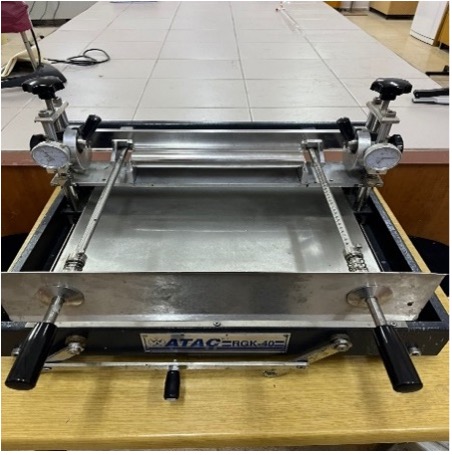
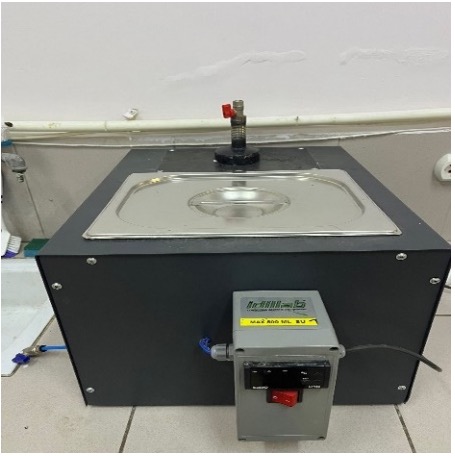
The foam obtained was applied to the fabric surface by coating method. The apparatus used for the application is shown in Figure 1. After application, the fabrics were squeezed under pad to remove excess liquid, then subjected to a steaming process for 10 minutes. The steamer is shown in Figure 2.
After steaming, the samples were washed for 5 minutes each in cold water at 20–25°C and then rinsed at 70–80°C. Finally, they were dried at 130°C for 2 minutes. Drying was performed in a laboratory-type mini oven. The samples to be treated with ozone were placed in the ozone application cabinet without being dried. Ozone treatment was performed using a 25 grams/hour ozone generator. The ozone gas produced by the generator was applied to the fabric in a closed cabinet for 15 minutes. After the process, the samples were ventilated to remove residual ozone and washed and dried. Thus, the bleaching process was completed.
Dyeing Applications
Following foam application and ozonation processes, dyeing trials were conducted in the laboratory using reactive dyes to evaluate the dyeability performance of the fabrics. The dyeing solution was prepared according to the following recipe (Table 3).
Chemical Substance | Sodium hydroxide | Silicate | Reactive Dye |
Amount (g/L) | 23,5 | 95 | 0,84 |
When preparing the dyeing solution, the specified chemicals were mixed with pure water to complete a total volume of 1000 mL. The prepared solution was applied to fabric samples using the impregnation method. After impregnation, the fabrics were rolled onto a roller, sealed airtight, and subjected to cold fixing. The fixing process was carried out at room temperature for 16 hours.
After the fixing process, the fabrics were washed for 5 minutes each in cold water at 20–25°C and then rinsed at 70–80°C. They were then subjected to neutralization processes containing acetic acid and finally dried at 100°C for 5 minutes to complete the dyeing process. The drying was performed using a laboratory-type dryer.
Tests for Colored Samples
Color Measurement
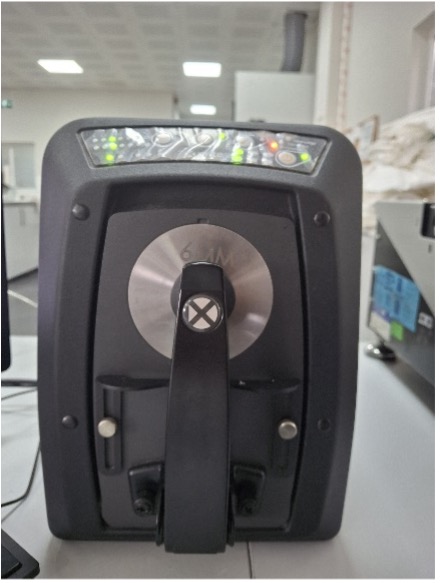
For the measurement of color intensity in the sample fabrics within the scope of this study, a GretagMacbeth X-Rite Color i7 Benchtop spectrophotometer was used. Measurements were performed under D 65 daylight and using a 10° standard observer. During the test, the L* (lightness-darkness), a* (redness-greenness), b* (yellowness-blueness), C*, h, and K/S values were determined. The spectrophotometer is shown in Figure 3.
Color Fastness Tests
To determine the colorfastness performance of fabrics, color fastness tests against acidic-alkaline perspiration and water were conducted. Fastness to water test was performed using a perspirometer at a temperature of 37 ± 2 °C, based on the TS EN ISO 105-E01 standard, while acidic and alkaline perspiration fastness tests were conducted according to the TS EN ISO 105-E04 standard.
Evaluation of Hydrophilicity and Capillarity Tests
Hydrophilicity and capillarity tests were performed to evaluate the water absorption and liquid transmission properties of the fabrics.
The hydrophilicity test was conducted to examine the spreading behavior and homogeneous distribution of the dye solution dropped onto the fabric surface. Measurements were made using a drop system; the drop's uniform distribution and absorption on the fabric surface were observed. This method provides qualitative information about the surface energy and wettability characteristics of treated fabrics.
The capillary test was performed to determine the fabric's ability to transport liquid upward through capillary voids within its fiber structure. The tests were conducted using a chronometer device in accordance with the TS 866 standard. Prior to testing, the samples were conditioned for 24 hours at a temperature of 20 ± 2 °C and a relative humidity of 65 ± 2%. Each sample was prepared in dimensions of 120 × 30 mm, and two reference lines were drawn parallel to the short edge, with 10 mm between them. One end of the sample was immersed in blue-dyed distilled water, and the rise of the liquid through the fabric was observed. The stopwatch was started when the liquid reached the first line and stopped when it reached the second line. The time read on the stopwatch was evaluated as the capillary water absorption rate of the fabric. At the end of the experiment, observations were recorded and the liquid transport behaviors of the samples were compared.
The Results About Bleaching Performance
Whiteness Results
As a result of the foam application method applied to fabric samples, a partial decrease in whiteness values was observed compared to the conventional method. While a whiteness value of 73 Berger was obtained on the reference fabric treated with the traditional bleaching method (Table 4-R0), this value ranged between 31.55 and 55.80 on fabrics treated with foam application. After foam application, the whiteness value of the sample treated with ozone post-treatment (Table 4-R5) was found to increase to 67.34. This value indicates that the Berger value suitable for dyeing has been achieved. The Berger value above 60 is an indicator of successful pretreatment (especially bleaching). This situation demonstrates that the ozone's strong oxidizing effect breaks down colored impurities, thereby increasing the fabric's whiteness level (Paksoy, N., Balcı, O., & Beşen, B. S., 2020) [9].
The increase in whiteness varied depending on the fabric type, with the highest value observed in the fabric coded R1 and the lowest value in the fabric coded R2. This result indicates that fiber surface morphology and chemical retention directly affect absorbency (Ghasemian, R., Barani, H. & Khazaei, F., 2025) [10]. The Berger whiteness values obtained are given in Table 4.
Fabric Code | Fabric Type | Process | Berger's Value |
Referans RO | Raw Cotton | Conventional bleaching | 73,00 |
R1 | Raw Lyocell | Foam Application | 55,80 |
R2 | Raw Cotton | Foam Application | 31,55 |
R3 | Raw Cotton | Foam Application | 40,30 |
R4 | Raw Cotton | Foam Application | 53,00 |
R5 | Desized Cotton | Foam Application | 34,68 |
Foam Application + Ozone | 67,34 |
Capillary Action Analysis Results
The capillary test results revealed that the liquid absorption behavior of samples treated with the foam application method was similar to that of the reference fabric, while in some fabrics it occurred more rapidly.
The capillary action time in RO-coded fabric processed using the traditional method was 9 seconds, while in fabrics treated with foam application, this time ranged from 7 to 15 seconds. The fastest absorption occurred in R1-coded fabric at 7 seconds, while in R3 and R4-coded fabrics, the time was longer depending on the fiber density. In the R5-coded sample subjected to ozone treatment after foam application, absorption was determined to be 10 seconds.
This result shows that the ozone treatment facilitates liquid transport by creating a microporous structure on the fiber surface (An, X., Zhang, R., Liu, L., Yang, J., Tian, Z., Yang, G., ... & Liu, H., 2022) [11].
In general, it has been determined that foam application does not adversely affect the capillary absorption property of the fabric, and in some cases, it increases liquid permeability by opening the fiber surface.
The obtained values are given in Table 5.
Fabric Code | Fabric Type | Process | Capillary Value |
Referans RO | Raw Cotton | Conventional bleaching | 9 sec |
R1 | Raw Lyocell | Foam Application | 7 sec |
R2 | Raw Cotton | Foam Application | 9 sec |
R3 | Raw Cotton | Foam Application | 15 sec |
R4 | Raw Cotton | Foam Application | 14 sec |
R5 | Desized Cotton | Foam Application | 9 sec |
Foam Application + Ozone | 10 sec |
Hydrophilicity Analysis Results
When examining the hydrophilicity test results, it was determined that the liquid spread in a circular and uniform manner on the surface of all fabrics to which the foam application was applied, with no beading or irregular distribution observed around the edges. This indicates that the foam application forms a homogeneous chemical film layer on the fabric surface and preserves the hydrophilic character of the fibers.
It was observed that the spread area of the liquid was slightly wider in the sample treated with ozone after-treatment, and that ozone supported wettability by increasing surface energy. These results indicate that foam application provides sufficient performance in terms of hydrophilic surface preparation prior to dyeing in pre-treatment processes.
The images obtained are presented in Figure 4 according to the R0, R1, R2, R3, R4, R5, R5-Ozone sequence.

Dyeing Performance Results
Color Measurement Results
Color measurements of the samples after dyeing were performed using a spectrophotometer. The L*, a*, b* values of the reference sample (Table 4-R0) are shown in Table 6. The color difference values calculated according to the CIELab system are given in Table 7. When calculating the color difference in Table 7, R0 was taken as the reference (values in Table 6). Table 7 also provides the K/S values of all samples after dyeing.
Fabric Code | Process | L* |
a*
| b* | C* | h° | K/S |
R0 | Conventional bleaching | 53.23 | 51.96 | -6.53 | 52.37 | 352.83 | 1.05 |
Fabric Code | Process | ΔL* | Δa* | Δb* | ΔC* | ΔH* | ΔE | K/S |
R1 | Foam Application | -2.37 | -0.70 | 0.40 | -0.74 | 0.32 | 1.11 | 1.27 |
R2 | Foam Application | -1.93 | 3.62 | 3.48 | 3.29 | 3.79 | 2.53 | 1.38 |
R3 | Foam Application | -2.43 | 2.72 | 2.19 | 2.48 | 2.46 | 1.95 | 1.39 |
R4 | Foam Application | -0.31 | 2.98 | 2.33 | 2.73 | 2.62 | 1.75 | 1.19 |
R5 | Foam Application | 0.61 | -1.62 | 1.32 | -1.76 | 1.13 | 0.94 | 1.10 |
Foam Application | 2.49 | -3.15 | 0.63 | -3.20 | 0.24 | 1.65 | 0.93 |
In all samples subjected to bleaching using the foam application method, the ΔL* values after dyeing were negative compared to R0, indicating a darkening of color. The most pronounced darkening occurred in the fabric coded R3. In contrast, the ΔL* value in the sample subjected to the ozone after-treatment was found to be +2.49, indicating a lightening effect. It is thought that ozone creates a lighter tone by breaking down some of the dye molecules on the fiber surface through oxidative action (Gabardo, R. S., de Carvalho Cotre, D. S., Lis Arias, M. J., Moisés, M. P., Martins Ferreira, B. T., Samulewski, R. B., ... & Bezerra, F. M., 2021) [12], (Zulfiqar, A., Arooj, F., Aftab, M., Rashid, M., Luqman, M., Kashif, SUR & Naseer, R., 2023) [13]. This also indicates that the ozone gas cannot be completely removed from the surface.
In the foam application samples, Δa* values were mostly positive, showing a shift towards red tones. This trend was particularly evident in samples coded R2 and R4. In the ozone post-treatment, the Δa* value was measured as -3.15, which was interpreted as a shift towards greenish tones.
When examining the Δb* values, it was observed that positive values were dominant in fabrics treated with foam application; this indicates an increase in yellow tones. However, after ozone application, this effect was seen to decrease with a Δb* value of +0.63.
ΔE values in all samples ranged from 0.94 to 2.53. Accordingly, it was determined that the color differences obtained with the foam application and ozone combination were within visually acceptable limits.
K/S values were measured in the range of 1.10–1.39 in the foam application samples. This indicates that the dye fixation ratio was maintained and that the foam application method could be used without reducing the dyeing performance/efficiency. The absence of significant negative changes in color strength is very important data. The K/S value after ozone treatment was determined to be 0.93. However, this decrease is not very significant numerically and does not produce a negative result in terms of visual impact.
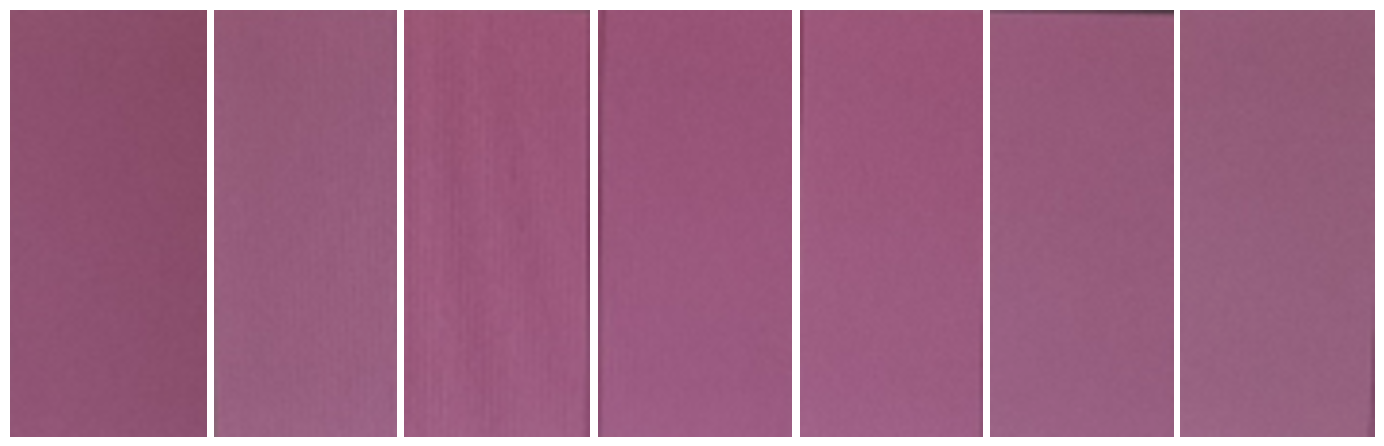
Photographs of the dyed fabrics are shown in Figure 5 according to the R0, R1, R2, R3, R4, R5, R5-ozone ranking.
Color Fastness Test Results
According to the color fastness results to acidic perspirations, values in the range of 3–4 were obtained for all samples. The color fastness of fabrics treated with the foam application method was observed to be at a similar level to that of the conventional method. The increase of this value to level 4 in the sample subjected to ozone post-treatment indicates that ozone stabilizes the dye bonds on the surface (Gabardo, R. S., de Carvalho Cotre, D. S., Lis Arias, M. J., Moisés, M. P., Martins Ferreira, B. T., Samulewski, R. B., ... & Bezerra, F. M., 2021) [12], (Eren, S., Öztürk, M. & Yiğit, İ.,2024) [14].
A similar trend was observed in the fastness to alkali perspiration test, with results in the range of 3–3/4 obtained for foam application samples, rising to 4 in ozone-treated samples (Zhang, L., Fu, J., Gao, W., Li, Y., & Fan, X., 2024) [15]. In the fastness to water test, values in the range of 3–3/4 were obtained for fabrics treated with the foam application method, while a value of 4 was obtained for those treated with ozone.
Overall, it was determined that the color fastness of samples treated with a combination of foam application and ozonation was similar to or better than that achieved with conventional methods. This indicates that both methods offer an environmentally friendly alternative without negatively affecting color fastness after dyeing.
The evaluation results of the durability tests are presented in Table 8.
Fabric Code | Fabric Type | Process |
Fastness to Acidic Persprations | Fastness to Alkaline Persprations |
Fastness to Water |
RO | Raw Cotton | Conventional bleaching | 3 | 3/4 | 3/4 |
R1 | Raw Lyocell | Foam Application | 3 | 3/4 | 3/4 |
R2 | Raw Cotton | Foam Application | 3 | 3 | 3 |
R3 | Raw Cotton | Foam Application | 3 | 3/4 | 3 |
R4 | Raw Cotton | Foam Application | 3 | 3 | 3 |
R5 | Desized Cotton | Foam Application | 3 | 3 | 3 |
Foam Application + Ozone | 4 | 4 | 4 |
In this study, the feasibility of combining classic bleaching recipes with foam application and ozonation methods for the bleaching process was investigated to reduce water, energy, and chemical consumption in cotton woven fabrics. The classic impregnation-steaming method was used as a reference.
All experiments were conducted under laboratory conditions. The experiments were conducted on different raw fabrics to examine the relationship between fabric type and method. At this stage, a relationship was determined between fabric-fiber type, sizing condition, and application performance.
The results obtained (particularly Berger and dyeing yield) demonstrated that when both methods are combined, they perform similarly to conventional bleaching processes while also providing environmental benefits. This result indicates that the conventional bleaching method is also suitable for foam application. Furthermore, it was observed that it could also be combined effectively with ozone.
The foam application technique has increased process efficiency by distributing the chemical substance more evenly on the fabric surface compared to traditional impregnation systems.
According to the bleaching results, while the whiteness values of fabrics treated with the foam application method were slightly lower than the reference, it was determined that the whiteness level increased significantly with the ozone after-treatment. In both cases, it was determined that the whiteness yield reached a sufficient level. This partial decreases did not cause any problems in the dyeing process.
Color measurements after dyeing showed that bleaching performed using the foam application method did not adversely affect the dye fixation rate or dyeing efficiency. No significant decrease in K/S values was observed, and ΔE values were determined to remain within acceptable limits. This indicates that pre-treatment with foam application does not affect the homogeneous color distribution in dyeing processes. After ozone gas application, proper ozone removal is essential. The oxidation sensitivity of reactive dyes is particularly important here.
Durability tests show that performance is measured at a level equivalent to conventional methods in fabrics where the bleaching method combines foam application and ozone.
It has been determined that the novel method provides an accurate and suitable basis in terms of both dyeing yield and fastness performance compared to the reference method. The bleaching operation with 1 liter of solution could be achieved with 50 ml of solution. Not using water in ozone applications has also been a significant advantage.
Overall, the combined application of foam application and ozonation methods offers an environmentally friendly and energy-efficient alternative that is compatible with sustainable production goals in textile finishing.
The findings obtained from the study are consistent with the results reported in the literature and support the industrial scalability of the method. The water consumption has decreased, leading to reduced chemical consumption, lower waste generation, and a shorter process duration.
This new process has provided a significant advantage in terms of both carbon and water footprint. The results also demonstrate an approach suitable for industrial applications.
References
- 1.[1] K. Pektaş and O. Balcı, "Çözelti üfleme tekniği ile farklı bitim işlemi kimyasallarının tekstil yüzeylerine aktarılması ve performanslarının değerlendirilmesi," Çukurova Üniversitesi Mühendislik Fakültesi Dergisi, vol. 40, no. 3, pp. 617-626.
- 2.[2] M. L. Catarino, F. Sampaio, and A. L. Gonçalves, "Sustainable wet processing technologies for the textile industry: a comprehensive review," Sustainability, vol. 17, no. 7, p. 3041, 2025.
- 3.[3] B. B. Kassie, H. Fentahun, and T. M. Daget, "Optimization of Combined Pre-Treatment Process for Bleaching of Cotton Woven Fabric Using Box–Behnken Design," Journal of Natural Fibers, vol. 21, no. 1, 2024. doi: 10.1080/15440478.2024.2396904.
- 4.[4] S. Eren, M. Öztürk, and S. Türkçen, "Pamuklu dokuma havlu kumaşlarin ozon gazi ile ağartilmasi," Uludağ Üniversitesi Mühendislik Fakültesi Dergisi, vol. 28, no. 2, pp. 631-644, 2023.
- 5.[5] M. Mohsin and S. Sardar, "Development of sustainable and cost efficient textile foam-finishing and its comparison with conventional padding," Cellulose, vol. 27, no. 7, pp. 4091-4107, 2020.
- 6.[6] M. Mohsin, S. Sardar, K. S. Akhtar, W. Anam, S. Ijaz, N. Afraz, and A. Jamil, "Performance enhancement of water and energy efficient foam dyeing and finishing through different foaming agents," J. Nat. Fibers, vol. 20, no. 1, p. 2164102, 2023.
- 7.[7] N. Afraz, M. H. Malik, M. Muhammad, S. Sardar, T. Naveed, A. Khan, and T. Nadeem, "Performance enhancement of novel and sustainable foam dyeing of polyester fabrics using disperse dyes," Fibers and Polymers, vol. 25, no. 9, pp. 3463–3470, 2024.
- 8.[8] K. Irmak, M. Gideroğlu, and S. Yılmaz, "Development of sustainable denim products with foam application technique in denim washing processes," Orclever Proc. Res. Dev., vol. 5, no. 1, pp. 459–469, 2024.
- 9.[9] A. Walawska, M. Olak-Kucharczyk, A. Kaczmarek, and M. H. Kudzin, "Environmentally friendly bleaching process of the cellulose fibres materials using ozone and hydrogen peroxide in the gas phase," Materials, vol. 17, no. 6, p. 1355, 2024.
- 10.[10] S. B. Hamida, V. Srivastava, M. Sillanpää, M. Shestakova, W. Z. Tang, and N. Ladhari, "Eco-friendly bleaching of indigo dyed garment by advanced oxidation processes," J. Clean. Prod., vol. 158, pp. 134–142, 2017.
- 11.[11] G. Y. Pabuşçu and N. G. Değerli, "Sürdürülebilirlik açısından tekstil ve moda tasarımında yeni bakış açıları: pamuklu kumaşlarda lazer ve ozon teknolojilerinin kullanımı," Ankara Üniversitesi Güzel Sanatlar Fakültesi Dergisi, vol. 6, no. 1, pp. 549–571, 2024.
- 12.[12] İ. Palabıyık, A. Körlü, and G. Ö. Kayseri, "Kenevir içeren denim giysilerin terbiyesinde çevre dostu bir yöntem: ozon ile yıkama," Çukurova Üniversitesi Mühendislik Fakültesi Dergisi, vol. 39, no. 4, pp. 881–895, 2024.
- 13.[13] N. Paksoy, O. Balcı, and B. S. Beşen, "A research of applicability of ozone bleaching process for the 100% cotton fabrics at jigger machine," Text. Apparel, vol. 30, no. 3, pp. 173–183, 2020.
- 14.[14] R. Ghasemian, H. Barani, and F. Khazaei, "Surface modification and performance of wool fibers after combined plasma and enzyme treatments," Sci. Rep., vol. 15, no. 1, p. 9079, 2025.
- 15.[15] X. An, R. Zhang, L. Liu, J. Yang, Z. Tian, G. Yang, et al., "Ozone pretreatment facilitating cellulase hydrolysis of unbleached bamboo pulp for improved fiber flexibility," Ind. Crops Prod., vol. 178, p. 114577, 2022.
- 16.[16] R. S. Gabardo, D. S. de Carvalho Cotre, M. J. Lis Arias, M. P. Moisés, B. T. Martins Ferreira, R. B. Samulewski, et al., "Surface modification of polyester fabrics by ozone and its effect on coloration using disperse dyes," Materials, vol. 14, no. 13, p. 3492, 2021.
- 17.[17] A. Zulfiqar, F. Arooj, M. Aftab, M. Rashid, M. Luqman, S. U. R. Kashif, and R. Naseer, "A sustainable approach to dyed cotton fabric stripping using ozone," Sustainability, vol. 15, no. 9, p. 7467, 2023.
- 18.[18] S. Eren, M. Öztürk, and İ. Yiğit, "The effect of surface modification with ozone in waterless (ScCO2) dyeing o polyester," J. Innov. Eng. Nat. Sci., vol. 4, no. 2, pp. 314–325, 2024.
- 19.[19] L. Zhang, J. Fu, W. Gao, Y. Li, and X. Fan, "Revealing the structural variation and degradation mechanism of cellulose during ozone oxidation treatment," Ind. Crops Prod., vol. 219, p. 119101, 2024.