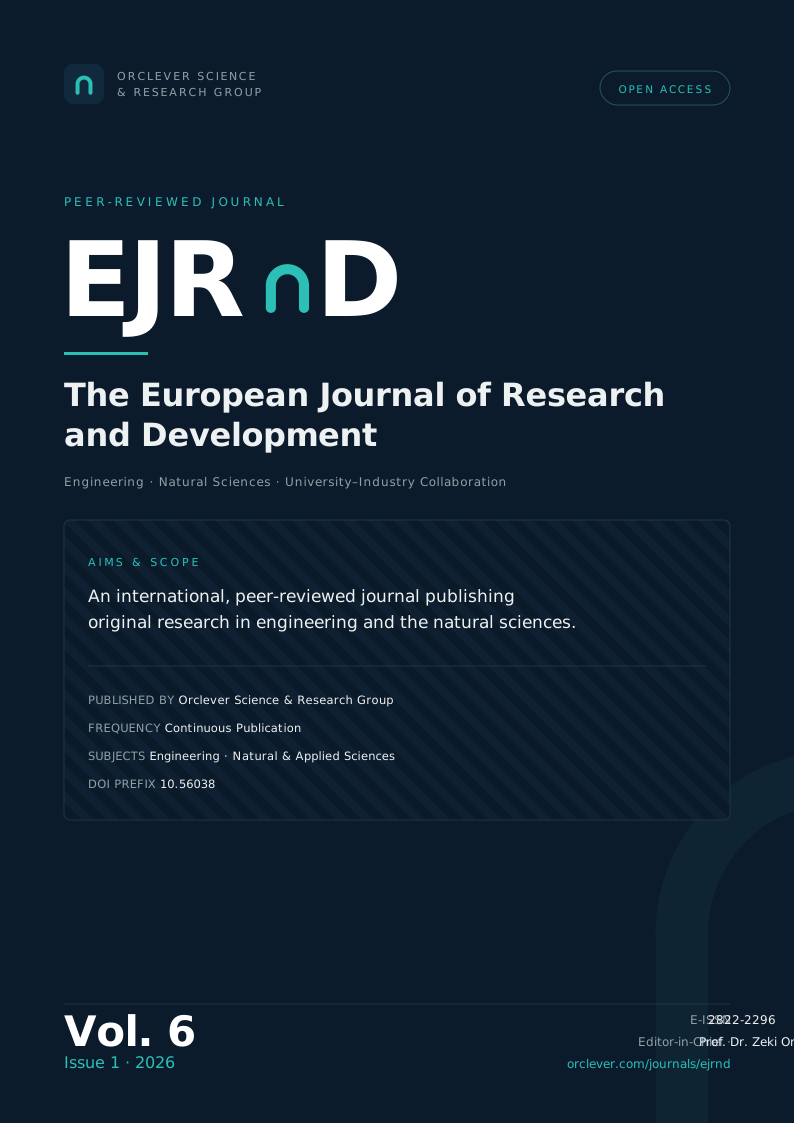
The European Journal of Research and Development
The European Journal of Research and Development (EJRnD) is a specialized, peer-reviewed scientific journal, published online
Impact Factor
-
Acceptance Rate
%27.46
Avg. Decision Time
23 days for 1st response
h-Index
7
Ethical Guidelines
Research ethics, plagiarism policy, and author responsibilities
Publication Ethics and Malpractice Statement
The European Journal of Research and Development (EJRnD) is committed to maintaining the highest standards of publication ethics. The journal follows the guidelines and best practices set forth by the Committee on Publication Ethics (COPE), and expects all parties involved in the publication process — authors, reviewers, and editors — to adhere to these ethical standards.
Duties of Authors
Authors must ensure that their submitted work is entirely original. Any use of the work or words of others must be appropriately cited. Authors must not submit the same manuscript to more than one journal simultaneously. All authors listed on a manuscript must have made a significant contribution to the research. Authors must disclose any financial or personal relationships that could influence their work. Authors are required to promptly notify the editor of any significant errors in their published work and cooperate in corrections or retractions. All research involving human participants or animals must have received appropriate ethical approval, which must be stated in the manuscript. Authors must declare the use of any artificial intelligence tools in the preparation of their manuscript.
Duties of Editors
Editors are responsible for deciding which manuscripts are published based on their academic merit, originality, and relevance to the journal scope, without regard to the race, gender, religious belief, ethnic origin, citizenship, or political philosophy of the authors. Editors must ensure that the peer review process is fair, unbiased, and timely. Editors must maintain the confidentiality of all submitted manuscripts. Editors must recuse themselves from handling manuscripts in which they have a conflict of interest. Editors must take reasonable responsive measures when ethical complaints are presented concerning a submitted or published manuscript.
Duties of Reviewers
Reviewers must treat all manuscripts as confidential documents. Reviews must be conducted objectively, and personal criticism of the author is inappropriate. Reviewers must identify relevant published work that has not been cited by the authors. Reviewers who feel unqualified to review a manuscript or unable to complete the review in a timely manner should notify the editor and decline the invitation. Reviewers must not use information obtained during the review process for their own advantage.
Plagiarism Policy
All manuscripts submitted to EJRnD are screened for plagiarism using iThenticate / Turnitin plagiarism detection software. Manuscripts with a similarity index exceeding 20% (excluding references and quotations) will be returned to the authors for revision or may be rejected. The journal follows COPE guidelines for handling cases of suspected plagiarism.
Retraction and Correction Policy
EJRnD follows COPE Retraction Guidelines. Articles may be retracted if there is clear evidence of unreliable findings (due to misconduct or honest error), plagiarism, duplicate publication, or unethical research. Corrections (errata) will be published for minor errors that do not affect the integrity of the findings. Expressions of concern may be published when there is inconclusive evidence of research or publication misconduct.
Data Fabrication and Falsification
The journal strictly prohibits data fabrication (making up research data) and data falsification (manipulating research data, images, or results). Any suspected cases will be investigated following COPE guidelines, and confirmed cases will result in rejection or retraction of the manuscript and notification to the authors institution.
Conflict of Interest
All authors, reviewers, and editors must disclose any relationships or interests that could influence or bias their work. Authors must include a conflict of interest statement in their manuscript. Financial and non-financial conflicts of interest must be declared.