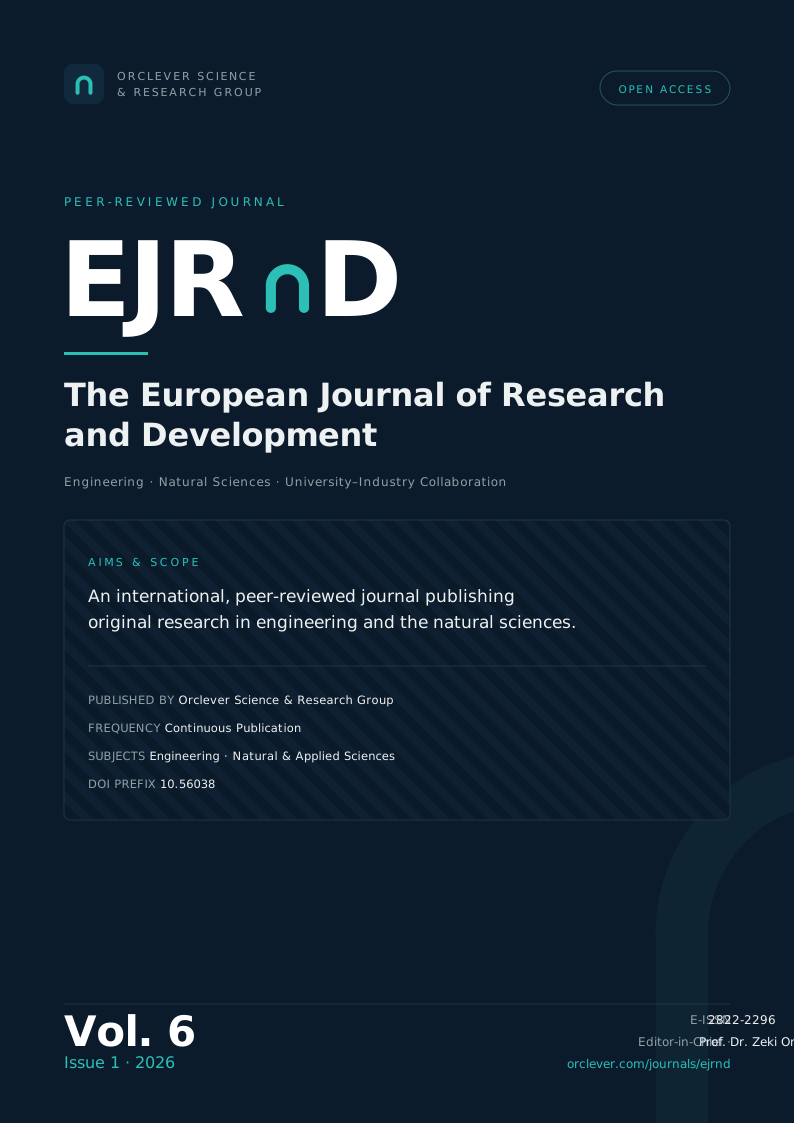
The European Journal of Research and Development
The European Journal of Research and Development (EJRnD) is a specialized, peer-reviewed scientific journal, published online
Impact Factor
-
Acceptance Rate
%27.46
Avg. Decision Time
23 days for 1st response
h-Index
7
Open Access Policy
Open access model, licensing, and article processing charges
The European Journal of Research and Development (EJRnD) is committed to the principle of immediate and permanent open access to scholarly research. All content published in the journal is made freely and publicly available online without subscription barriers, pay-per-view restrictions, or embargo periods. Through this model, EJRnD aims to support the widest possible dissemination of scientific knowledge, enhance the visibility and accessibility of published research, and contribute to the advancement of global scholarly communication. This approach is consistent with internationally recognized open access frameworks, including the Budapest Open Access Initiative (BOAI) and the Berlin Declaration on Open Access to Knowledge in the Sciences and Humanities.
All articles published in EJRnD are available in full text through the journal’s online platform immediately upon publication. Readers may access, read, download, and use published content in accordance with the journal’s licensing terms. The journal maintains a publicly accessible online archive in order to ensure continuous access to its scholarly record and to support the long-term availability of published research. Clear public information on access conditions, licensing, and archive availability is also consistent with internationally recognized best practice in scholarly publishing.
EJRnD publishes its articles under the Creative Commons Attribution 4.0 International (CC BY 4.0) license. Under this license, users may share, copy, redistribute, adapt, and build upon the published material for any purpose, including commercial use, provided that appropriate credit is given to the original author(s) and source, a link to the license is provided, and any changes made are clearly indicated. This licensing framework supports broad academic dissemination and responsible reuse while preserving attribution requirements and open reuse principles.
The journal considers open access not only as a publication model but also as a means of strengthening research visibility, academic exchange, and knowledge sharing across disciplinary, institutional, and geographic boundaries. In this respect, EJRnD supports the broader objectives of open scholarship by promoting unrestricted readership and responsible reuse of peer-reviewed research outputs. The journal’s open access approach is intended to facilitate wider circulation of scientifically valuable work and to increase the accessibility of research for scholars, practitioners, institutions, and the public.
EJRnD is also committed to presenting its journal information, editorial policies, access conditions, and licensing terms in a clear and transparent manner through its official website. This commitment is aligned with the COPE Principles of Transparency and Best Practice in Scholarly Publishing, which emphasize the importance of publicly available information on editorial processes, copyright and licensing, ownership, access conditions, and journal governance. These principles also form part of the broader transparency culture expected in reputable scholarly publishing environments.
In developing its open access practices, EJRnD also takes into account widely recognized international expectations for transparent open access publishing, including the importance of clear license information, immediate free access to full-text content, and publicly stated journal policies. These are also consistent with the types of standards reflected in major open access quality frameworks such as those used by DOAJ for evaluating open access journals.
Through its open access policy, EJRnD seeks to maintain a publication environment that combines accessibility, transparency, responsible licensing, and scholarly integrity. By ensuring that research outputs are openly available and supported by clearly stated editorial and licensing policies, the journal aims to strengthen its contribution to the international research community and the broader dissemination of scientific knowledge.